Walk down Overhill Road or Tomahawk Road this week and you might see a ladder crew measuring a roofline, clipping test strands to a gutter, then packing up without turning anything on. It looks premature. Halloween candy is barely on the shelves. But in Mission Hills, this is exactly on schedule. Ask around and you will hear a version of the same answer: if you wait until Thanksgiving week like the rest of Johnson County, you have already missed your window.
The reason has nothing to do with holiday enthusiasm and everything to do with what is sitting on top of these houses.
The Roofs Set the Calendar
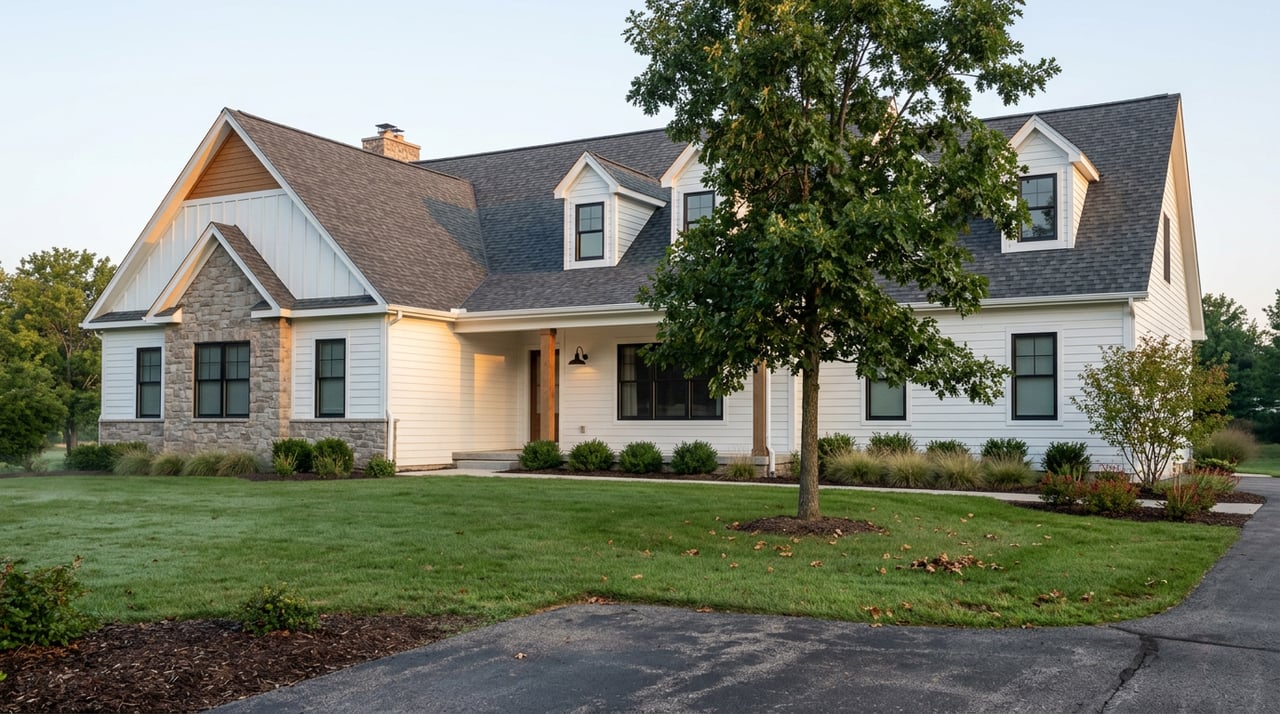
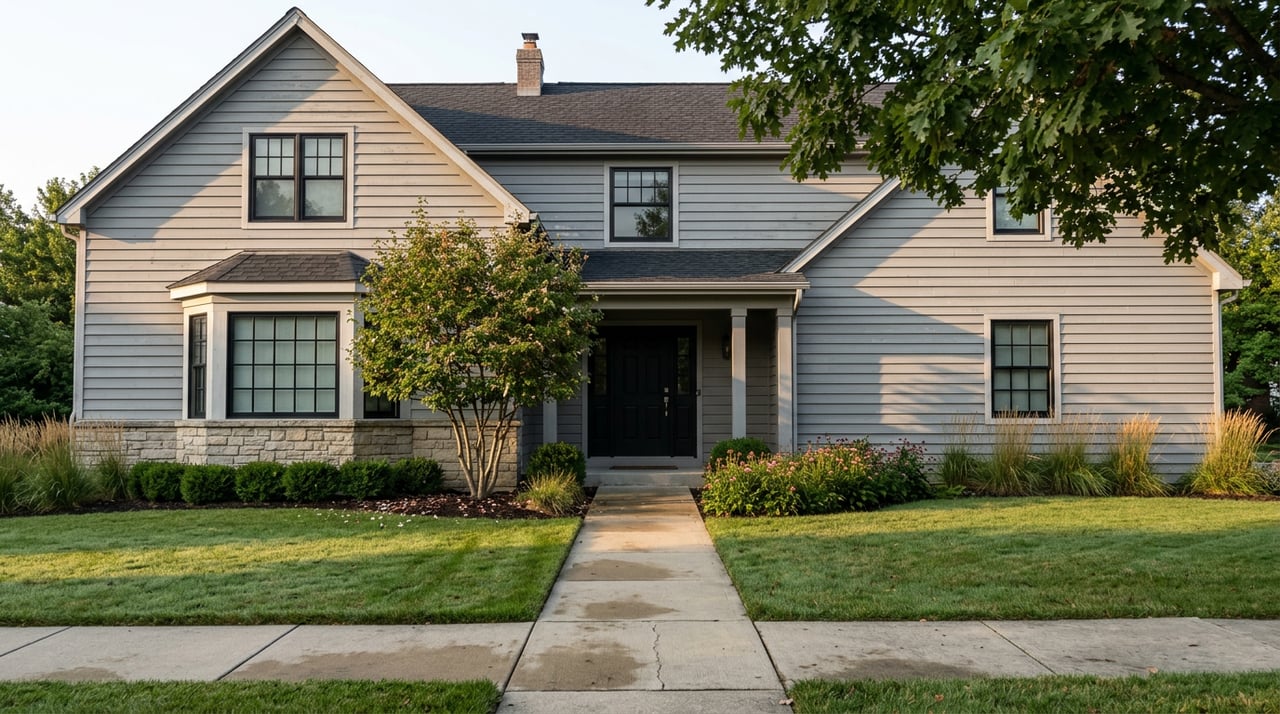
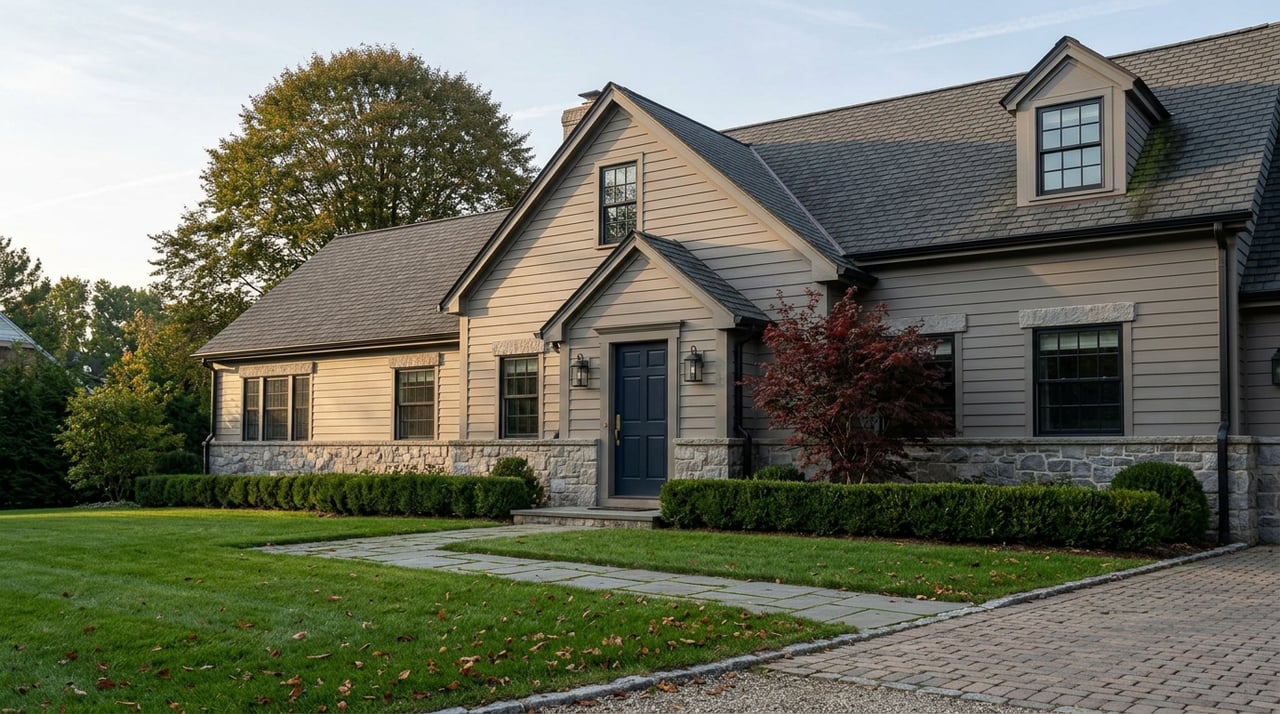
Mission Hills was built out mostly in the 1920s and 1930s under J.C. Nichols, and the housing stock reflects it: Tudor Revival homes with steep slate gables, Georgian and Colonial Revival brick, French eclectic designs with turrets and tile. That architecture is the whole reason the neighborhood photographs so well in July. It is also the reason lighting it for December takes real planning.
Slate, tile and cedar roofs cannot be walked on. They cannot be stapled or screwed into without risking a crack that will not show up until the next freeze-thaw cycle splits it open. So the installation has to work around the material instead of through it. Crews clip strands to gutters and ridge lines, including the copper gutters that many of these homes still have, using purpose-made clips instead of staples. They work from ladders and extension poles rather than from the roof itself. On a house with the kind of broken, multi-gabled roofline common here, that turns a job that would take an afternoon on a standard ranch house into a full day or longer.
Only a handful of installation crews in the metro are actually set up for that kind of work. That scarcity, combined with the labor time per house, is what pushes the planning conversation into September. Wait until the weather turns and the calendar fills with everyone else's December wish list, and there is a real chance your installer cannot fit you in before the freeze window closes in mid-November.
The Unwritten Style Guide
Anyone who has driven through Mission Hills in December already knows the look, even if they have never named it. There is a code here, and it is remarkably consistent from house to house:
- Warm white lights only, never multicolor
- No inflatables and no animated displays
- Garland and wreaths at leaded entry doors
- Candles or candle-style lights in the windows
- Specimen trees wrapped rather than left bare
None of this is written into any ordinance. It is closer to an inherited sensibility, the same one that put fountains, statues and imported urns on the neighborhood's traffic islands in the first place. J.C. Nichols was explicit about what he was trying to build here. In a 1937 speech he said the company had tried to make its properties into a kind of "outdoor museum," and that the goal was to give residents a certain pride that would push them to keep beautifying their own ground. The Christmas light restraint is that same instinct showing up ninety years later. Nobody wants to be the one house on Mission Drive that breaks the mood with a giant inflatable snowman next to a museum-quality Venetian fountain from the 1920s.
Two Doors Down, the Plaza Runs the Same Clock
Mission Hills did not develop this rhythm in isolation. It sits directly against the Country Club Plaza, which Nichols built as the commercial half of the same vision, and the Plaza runs on an almost identical September-to-November prep schedule for one of the most famous holiday traditions in the Midwest.
The Plaza Lights started as a single strand over one store entrance in 1925. By 1930 it had grown into a full lighting ceremony, and the display now covers 15 blocks. The 2025 ceremony, held Thanksgiving night, was the 96th annual. Every year, a small crew of electricians from Capital Electric starts stringing lights across the district right after Labor Day, working through the fall heat so that everything is tested and ready before the Thanksgiving switch flip. Once lit, the lights run nightly from 5 p.m. to 3 a.m. through mid-January, which meant this past season they stayed on through January 11, 2026.
That timeline is not a coincidence sitting next to Mission Hills. It is the same production logic, applied at neighborhood scale a few blocks away. Here is roughly how the two seasons line up if you are tracking them from a front porch on Belinder or Mission Drive:
| Timeframe | What's happening |
|---|---|
| Early-to-mid September | Mission Hills homeowners with slate or tile roofs finalize install bookings; Plaza crews begin stringing lights |
| Late September through October | Ladder-and-pole installs proceed house by house across Mission Hills |
| Early-to-mid November | Freeze window closes; remaining installs need to be locked in |
| Thanksgiving night | Plaza Lighting Ceremony switches on; Mission Hills displays typically go dark-to-lit around the same week |
| Through mid-January | Both stay lit nightly into the new year |
If your neighbor's lights are already up by the time the Plaza switch flips, it is not because they rushed. It is because the schedule for a slate roof simply starts that much earlier.
What This Means If You Live Here
None of this changes much for a resident with a newer roof or simpler rooflines, but it explains a pattern that puzzles a lot of people who move here from elsewhere in Johnson County: why the ladder trucks show up so early, why installers quote by the day instead of the hour, and why some of your neighbors seem to be thinking about December before anyone else has finished mowing their lawn one last time.
It is also worth building your own December around more than just the lights. The city hosts a Verona Columns Concert and an annual Street Fair that draw families out of their yards, and City Hall runs its own tree-lighting ceremony each winter with caroling, hot cocoa, cookies, and Santa arriving by firetruck. It is a small-town version of the season sitting two miles from one of the largest light displays in the country, and residents get both without leaving the ZIP code.
If you want a reason to take a longer walk this fall before the lights go up, the neighborhood's traffic-island statuary is worth slowing down for on its own. The Venetian fountain near State Line and Brookwood was installed in a formal ceremony back in 1923, placed opposite a matching piece on the Missouri side as a kind of handshake between the two halves of Nichols' original vision. The small well-head tucked into the traffic island at Tomahawk and Seneca is easy to miss by car and much easier to appreciate on foot. If fountains and public art across the wider Country Club District interest you beyond Mission Hills' own collection, Blake's guide to Kansas City's fountains rounds up several of the pieces Nichols placed just down the road on the Plaza.
By the time Thanksgiving arrives and the Plaza's switch flips a few blocks away, most of Mission Hills will already be lit, quietly, in warm white, exactly the way it has been for close to a century. The prep work that made it possible started weeks ago, on a ladder, on a roof most people never think twice about.
If you are curious what a home with that kind of roofline, that kind of history, and that kind of neighborhood is actually worth in today's market, Blake & Associates puts together free home valuations built on real Mission Hills data, not a generic Johnson County average. Reach out anytime you want an honest read on where your home stands.